
BRIEF INFO ABOUT COMPUTER PACKAGE UNIFLOT (CALCULATIONS FOR FLOTATION ORES AND PROCESSES); Russian / English languages; Windows NT, 2000, XP. (For mineral processing, metallurgy, chemistry, mining and geology).
Computer package UniFlot consists of dialog and automated programs making various calculations for industrial / lab flotation (and partly other) flowsheets including: flowsheet mass-balance, flowsheet analysis, prediction, optimization, automated process control of industrial flotation flowsheets, analyticdesign of new flowsheets, ore flotometry, etc. The programs solve the following problems.
- Component balance and fraction balance calculations for flotation flowsheets, component balance calculations for other flowsheets (magnetic / gravity / radiometric separation, etc.);
- Quantitative estimation and optimization of flotation separability of processed ores (using flotometry and granulo-flotometry);
- Analysis, predictive calculations, design of new flotation flowsheets and optimization of existing industrial flowsheets;
- Automated control of industrial flotation processes.
Main part of programs (BF, FI, PF, etc.) are applicable to flotation processes. Some programs (BTF, BT) are used for component balance calculations of any mineral processing flowsheets (flotation, gravity separation, magnetic separation, etc.), including complicated flowsheets with multi-outstream unit operations; these programs may be used in metallurgical and chemical industries as well.
The UniFlot programs are based on new ideas for flotation flowsheets including: separation characteristics of flotation units and flowsheets, flotometric fractional composition of feed ore and flowsheet streams, fractional mass transfer, etc. The new approach makes available regular predictive calculations of yields, grades, recoveries and other indices for industrial flotation. The predictions consider the following effects: flotation flowsheet configuration, number of cleaners and scavengers, flotation volume of units, unit residence times, slurry aeration, slurry level, etc.
Roughly the programs are processing the following sets of technological flotation data:
- Flotometric / granulo-flotometric composition of feed ore (and streams):
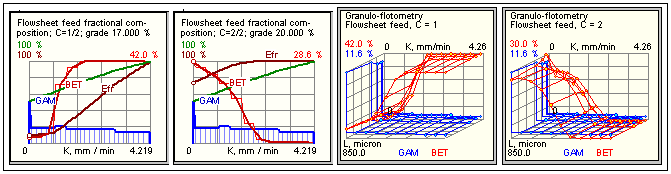
Flotometric composition (GAM and BET-functions) are calculated from the sampling data by programs FI, FL, GFI, GFL and FI_graph.
- Configuration and parameters of flotation flowsheet:
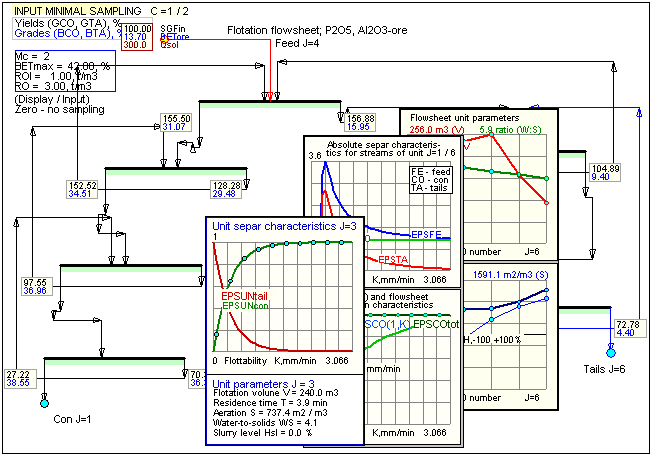
Any technological flowsheet is entered by configuration matrix with consequent automatic composition of math equations for balance, flotometric, predictive, optimizing and other calculations.
- Technological indices (yield, grade, recovery) and related optimality criteria:
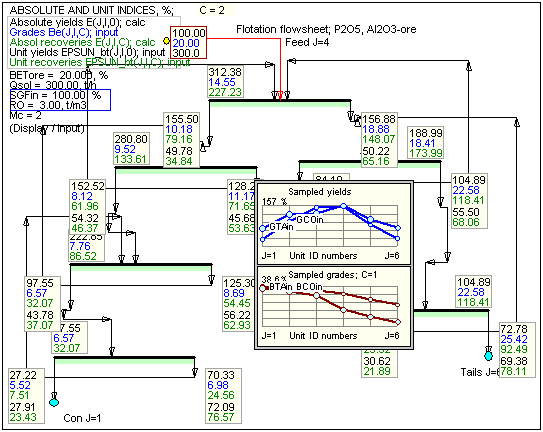
Sampling matrix indicates priority points (streams) for further automatic calculations. About 100 combinations of optimality criteria (including technological and economical ones) may be used for optimizing flowsheet configuration and flotation unit parameters, for upper level of automated flotation process control, etc..
Brief info about main dialog programs is following.
Program BTF (Component balancing calculations of flotation flowsheets) makes component balancing calculations to match sampling data of flotation flowsheets (with multi-component balance).
Program BT (Component balance calculations of multi-outstream- unit flowsheets) makes conventional component balancing calculations to match sampling data of any technological flowsheet. Program BT is valid for flowsheets of arbitrary configuration having multi-outflow units. Program BT is applicable to flotation, gravity separation, magnetic separation and other mineral processing flowsheets.
Program BF (Fraction balancing calc of flotation flowsheets) finds all technological indices if given flowsheet configuration with parameters and reduced number of measured indices. Innovative ideas are based one separational characteristics of the flowsheet. Input data include: Flowsheet configuration, parameters of unit flotation operations (residence times, etc.), measured yields and grades of several flows (less than for traditional mass balancing). Output data cover corrected values of flotation unit residence times; Separational characteristics for all flows; Mass-balance of flotability fractions for all flows including fraction distributions and fraction grades for all components; Mass-balance of solids and components for all flows including flow rates, yields, grades, recoveries, mass-balance of solid-to-water for all flows. Program BF makes balancing calculations of flotation technological indices not only by the ore components (as in conventional approach), but additionally - with consideration of flotofraction distributions in the flows of a flotation flowsheet, which increases the accuracy of the balancing calculations. In parallel the program BF serves for flotometric analysis of a flotation flowsheet feed.
Program FI (Flotometry in industry) calculates flotometric composition of feed ore and flows of an industrial flowsheet if given its parameters and sampled indices. Input data: flowsheet configuration; parameters of units (volumes, residence times, air holdups, solids-to-water ratio); measured yields and grades of some flows. Output data: fractional flotometric composition of the feed ore; fractional composition of all streams of the flowsheet. Program FI calculates flotometric composition (GAM(k)-, BET(k,C)-functions) for feed and flows of arbitrary industrial / lab flotation flowsheet. BET-functions may include up to 10 ore-components, the components being valuable / contaminating metals, non-metals, chemical compounds, minerals.
Program FL (Flotometry in laboratory, kinetics) finds the flotometric composition of any ore sample if given lab test data (kinetics, etc.). Effects of reagent manipulations may be investigated to reach an optimal reagent / comminution regime. Input data: Lab flowsheet configuration, e.g. common batch flotation; Lab measured yields and grades of some products of chosen lab flowsheet; Lab data on batch flotation kinetics of yield and recovery (or grade). The program outputs: Fractional flotometric composition of any sampled mineral material; Effect of various flotation reagents on fractional composition; Program FL calculates flotometric composition (GAM(k)-, BET(k,C)-functions) for any sampled mineral material. The sampled mineral material is tested in lab to get flotation kinetic data; or an arbitrary lab flowsheet is used. (BET-functions may include up to 10 ore-components, the components being valuable/ contaminating metals, non-metals, chemical compounds or minerals).
Program GFI (Granulo-flotometry in Industry) finds 2-dimensional size and flotability distributions of mineral fractions and components for the feed and all streams of industrial flowsheets from reduced sampling. The program calculates granulo-flotometric composition (GAM(k,l)-, BET(k,l,C)-functions) for feed and flows of arbitrary industrial / lab flotation flowsheet. (BET-functions may include up to 10 ore-components, the components being valuable/contaminating metals, non-metals, chemical compounds, minerals.)
Program GFL (Granulo-flotometry in laboratory, kinetics) calculates granulo-flotometric composition (GAM(k,l)-, BET(k,l,C)-functions) for tested in lab mineral materials. It finds the 2-dimensional ‘size-flotability’ distributions by lab experiments. The main output is the granulo-flotometric composition (GAM(k,l)-, BET(k,l,C)-functions) for tested in lab mineral materials.
Program FS (Flotation separability calculations) calculates flotation separability curves and tables starting from known flotometric composition of a mineral material (GAM(k)-, BET(k,C)-functions obtainable via programs BF, FI, FL).
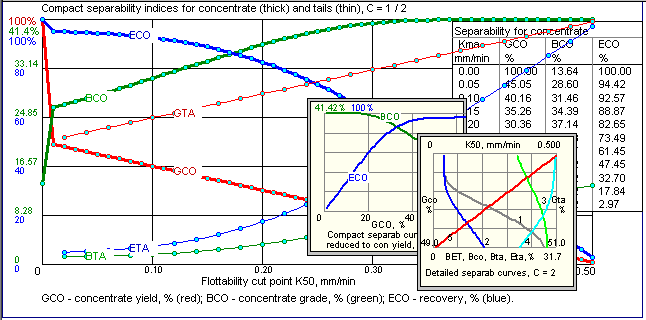
Program FSM (Flotation multi-separability calculations) calculate flotation separability curves and tables in case of multi-concentrate production starting from known flotometric composition of a mineral material.
Program PF (Predictive calculations for flotation flowsheets) predicts the technological indices if given flotometric data on feed ore and the flowsheet configuration and parameters. Input data: flotometric composition of processed feed ore (flotability distribution and fraction grade for all valuable and contaminating ore components); flowsheet configuration (number of cleaners and scavengers, connections); parameters of flotation units (residence times, air holdups, etc.). Output data: tonnage, yield, grade, recovery for all flows; separational behavior of any path through the flowsheet; effects on all the indices caused by changes in residence times of flotation units, air holdups of the units, fractional composition of the feed ore, configuration of a flowsheet, etc. Program PF makes predictive calculations of technological and other indices (yields, grades, recoveries, etc.) for industrial flotation flowsheets; based on the flowsheet configuration, unit parameters, feed ore fractional composition.
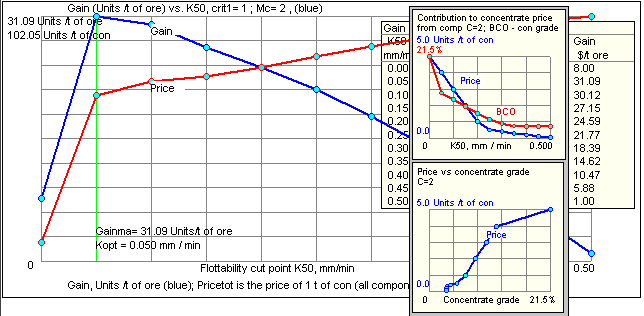
Program DF (Design / optimization of flotation flowsheets) finds optimal configuration and parameters of flotation flowsheet if given flotometric composition of feed ore and optimality criteria. The program uses over 100 optimality criteria combinations and designs: flowsheet cut point and configuration; flowsheet parameters; technological indices; solid-to-water balance; separational characteristics of the optimal flowsheet. The program designs optimal flotation flowsheets, using most important optimality criteria (technological, economical). The optimization covers: the flowsheet configuration, the number of cleaner and scavengers, the flotation volume of units, the slurry aeration, etc. - with consideration of the feed ore fractional composition.
Program CF (Optimal control of flotation flowsheets) finds optimal manipulated parameters of industrial flotation flowsheets using measured actual yields and grades of flows. Program CF serves for upper control level of industrial flotation. Using data on the flowsheet configuration, actual unit parameters and sampled yields and grades of flows the program finds values of available manipulated control inputs: flowsheet cutpoint, unit residence times, air holdups, solid-to-water ratios - to satisfy optimality criteria. Program CF calculates optimal control commands (unit aeration S(J), unit water-to-solid WS(J), etc.), for the upper control level, using selected optimality criteria (technological, economical). The program CF keeps optimal performance of an industrial flotation flowsheet under fluchtuating feed ore composition and other disturbances.
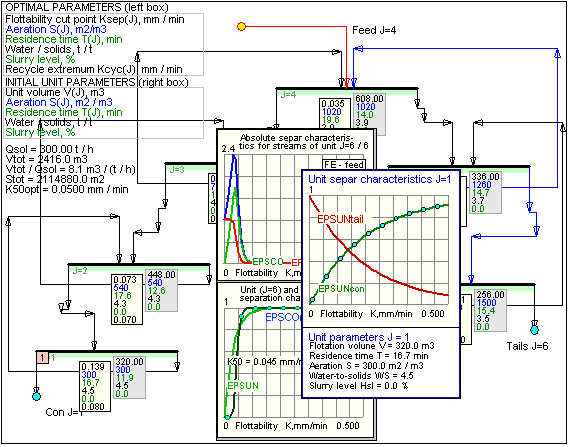
The UniFlot package includes automated versions of some programs mentioned above. The automated programs make modified calculations using initial input data from files. The initial input data (sampling, parameters, etc.) are modifies on the flowsheet graph. Afterwards modified calculations are immediately performed. The automated programs are following.
Program BT_Graph (Automated component balance calculations of multi-outstream-unit flowsheets) makes mass component balance calculations using modified partial (or complete) sampling. Initial data are entered from file for further modification. Program BT_Graph is automated and fast operating version of programs BT and BTF; it makes modified automated component balancing calculations of technological flowsheets.
Program BF_Graph (Automated fraction balance calculations of flotation flowsheets) makes mass component and fraction balance calculations using modified partial (or complete) sampling with additional flotometric analysis and corrected fractional balance. Initial data are entered from file for further modification. . Program BF_graph is express version of program BF; it makes modified automated component balancing calculations of flotation flowsheets.
Program FI_Graph (Automated flotometry in industry) calculates flotometric composition of feed ore and flows of an industrial flowsheet if given its parameters and sampled indices. Input data: flowsheet configuration; parameters of units (volumes, residence times, air holdups, solids-to-water ratio); measured yields and grades of some flows. Output data: fractional flotometric composition of the feed ore; fractional composition of all streams of the flowsheet. Program FI_graph is express version of program FI.
Program PF_Graph (Automated predictive calculations of flotation flowsheets) predicts the technological indices if given flotometric data on feed ore and the flowsheet configuration and parameters. Input data: flotometric composition of processed feed ore (flotability distribution and fraction grade for all valuable and contaminating ore components); flowsheet configuration (number of cleaners and scavengers, connections); parameters of flotation units (residence times, air holdups, etc.). Output data: tonnage, yield, grade, recovery for all flows; separational behavior of any path through the flowsheet; effects on all the indices caused by changes in residence times of flotation units, air holdups of the units, fractional composition of the feed ore, configuration of a flowsheet, etc. Program makes predictive calculations of technological and other indices (yields, grades, recoveries, etc.) for industrial flotation flowsheets; based on the flowsheet configuration, unit parameters, feed ore fractional composition. Program PF_graph is express version of program PF.
Program CF_Graph (Automated calculations for optimal control of flotation flowsheets) calculates optimal control commands of upper level for flotation flowsheets; preliminarily the program makes mass balance calculations using modified partial (or complete) sampling with additional flotometric analysis. Initial data are entered from file for further modification. Program CF_Graph is automated and fast operating version of program CF.
Program FM (File manager) decodes and displays information saved in data-files.
Math calculations are highly automated. After the configuration of a technological flotation / separation flowsheet is entered or designed, the corresponding set of necessary and sufficient equations is automatically composed and later numerically specified. Consequent mathematical calculations cover component balance and fraction balance equations (50 flotation fractions), separation characteristics, prediction, optimization, etc. Most sophisticated calculations deal with flotometric analysis including solution of special integral-type equations.
The UniFlot package is useful in mineral processing, metallurgy, chemistry, mining and geology; it is adaptable practically to any industrial situation. The package is permanently developing.